The Competency-Based Curriculum (CBC) was introduced with a clear promise: to shift learning from memorization to skill development, creativity, and real-world application. In principle, it represents a major step forward in education. In practice, however, many schools are finding that implementation is significantly more complex than anticipated.
While the curriculum itself is well-structured, the operational burden placed on schools has increased. Teachers and administrators are now expected to manage continuous assessments, detailed learner progress tracking, frequent reporting, and constant parent communication—all at once. For many institutions, this shift has exposed gaps in systems, training, and digital infrastructure.
1. The Administrative Load Behind CBC
One of the biggest challenges schools face is the sheer volume of documentation required. Unlike the previous system, CBC relies heavily on ongoing assessment rather than end-term examinations.
This means teachers must continuously record learner progress across multiple competencies, update records regularly, and generate structured reports that reflect individual development.
2. Fragmented Systems and Manual Processes
Many schools still rely on spreadsheets, paper-based systems, or disconnected digital tools. This fragmentation creates inefficiencies and increases the likelihood of errors or duplicated work.
In some cases, different departments within the same school maintain separate records, making it difficult to consolidate learner data into a single, accurate view.
3. Difficulty in Tracking Learner Progress
CBC emphasizes individualized learning paths, but tracking each learner’s competency development manually can be overwhelming, especially in larger classes.
Teachers often struggle to maintain real-time visibility of student progress, which affects timely intervention and support.
4. Parent Communication Gaps
Another key expectation under CBC is continuous parent engagement. However, many schools lack structured communication systems to keep parents updated consistently.
As a result, communication often becomes reactive rather than proactive, typically happening only when issues arise.
5. Reporting and Compliance Pressure
Schools are also required to generate detailed reports that align with CBC standards. Preparing these manually is time-consuming and often diverts attention away from actual teaching.
This administrative pressure is one of the most commonly cited pain points among educators adapting to the new system.
The Need for Integrated School Management Systems
As these challenges accumulate, it becomes clear that the issue is not with CBC itself, but with the tools and systems used to implement it.
Schools need integrated platforms that bring together assessment tracking, reporting, communication, and analytics into a single, unified ecosystem. Without this integration, CBC risks becoming an administrative burden rather than an educational improvement.
Moving Toward Simpler, Smarter Implementation
Across the region, a growing number of schools are beginning to adopt digital systems designed specifically to streamline CBC workflows. These systems reduce manual workload, centralize learner data, and provide real-time insights that support both teachers and administrators.
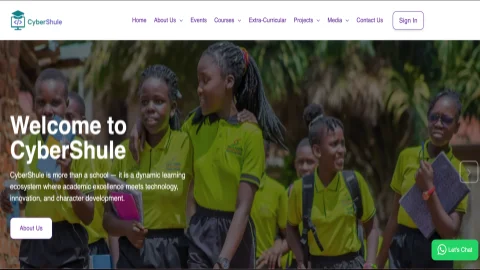
Solutions such as CyberShule are part of this shift—offering tools that align directly with CBC requirements while simplifying day-to-day school operations. Rather than replacing the educator’s role, they aim to remove friction so that teachers can focus more on learning outcomes and student development.
Conclusion
CBC is a forward-thinking curriculum, but its success depends heavily on how effectively it is implemented at the school level. Without the right systems, schools risk being overwhelmed by administrative demands.
With the right digital infrastructure, however, CBC becomes more manageable, more transparent, and ultimately more impactful for learners.